Property types
Flat roofs on townhouses and row houses
Row houses in older parts of Toronto, Hamilton and Ottawa often have flat or nearly flat roofs. The roof is yours, but the walls, the parapets and sometimes the water path are shared.
- Tight access
- Shared parapets and walls
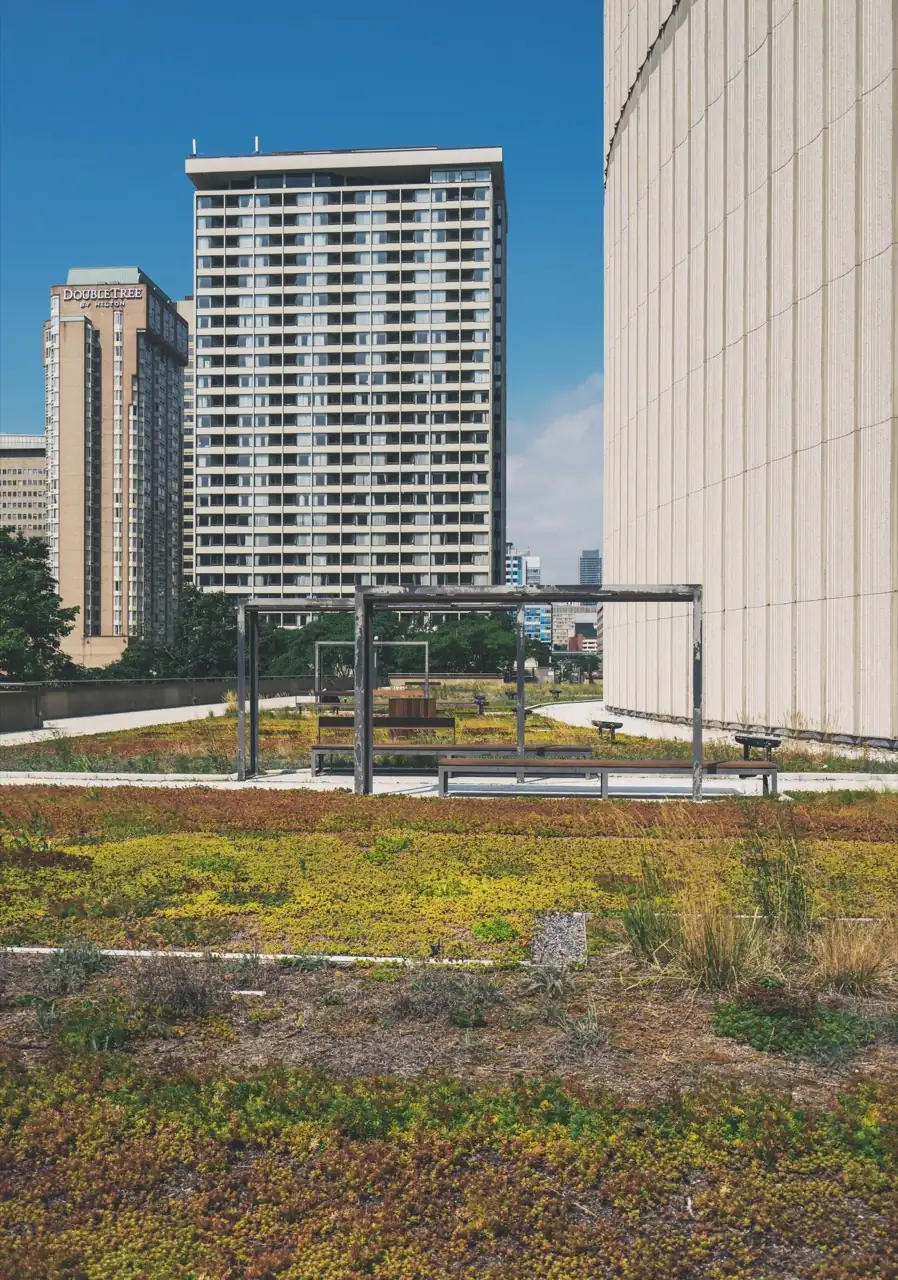
What is different about a row house roof
Row house roofs sit between two party walls, with parapets on both sides and a front and rear edge. The parapet is where most leaks start: the brick top, the coping and the membrane turned up the wall are three different materials meeting in one spot. When the mortar opens up, water enters behind the membrane and shows up inside as a stain on the party wall.
The second difference is logistics. There is often no side yard, no driveway and no room for a dumpster. Materials may have to go up a ladder, through the house, or by a small lift from the street. That affects labour and, so, the quote.
Problems we see most
Parapet and wall-edge leaks
Failed flashing and cracked coping let water in at the edges. See flashing and seam repair.
One drain for the whole roof
A single drain or scupper is a single point of failure when it blocks. See clogged drains.
Snow load and ice at the edges
Drifting snow against a parapet melts, refreezes and works under the edge. See ice and snow damage.
Layered old roofs
Several generations of tar and roll roofing add weight and hide wet insulation.
Working next to neighbours
You do not need permission to repair your own roof, but neighbours should hear about it first. Tell them the likely dates, that there will be noise from tear-off, and that torch-on work or hot asphalt will not be done where it is unsafe. If the roof drains onto or across their roof, or the party wall needs flashing work on their side, agree what happens before the day, not during it.
Where a torch is unsafe next to wood framing or combustible cornices, many contractors use cold-applied or self-adhered systems instead. Ask which method is proposed and why. Rules on hot work and permits differ by municipality, so check with your local building department; see re-roofing permits.
Materials that tend to suit
EPDM
Large single sheets mean few seams along long parapets. 20 to 30 years. See EPDM roofing.
Self-adhered modified bitumen
No open flame and good for tight, detailed edges. See modified bitumen.
Tapered insulation
If the roof has no slope to a drain, a tapered layer can fix that during replacement. See tapered insulation.
How the work is planned
Roof walk
We check the parapets, the coping, the drain and how the roof meets each party wall.
Material route
Agree where materials go up and where debris comes down. Street parking permits may be needed for a truck or lift.
Neighbour notice
A short note through the door: dates, noise, who to call.
Edges first
Parapets and wall flashings get as much attention as the flat field, because that is where the leak usually starts.
What to prepare
Photos of the parapet tops
Close-ups of cracked mortar, loose coping and where the membrane meets the wall.
Where the stain is
Which party wall or ceiling shows water, and when it shows (after rain, after snow melt).
Street access
Whether a truck can stop at the front or a lane runs behind.
Condo or freehold
Some townhouses sit in a condo corporation or a shared-maintenance agreement. Check who is responsible for the roof. See condo roof planning.
Questions from row house owners
Who pays if the shared parapet is leaking?
That depends on your property documents and agreements with the neighbour. Photograph the damage and talk to the neighbour before work starts.
Can the roof be done without a dumpster?
Often yes. Debris can be bagged and lowered, then taken away in a truck. It adds labour time, which the quote reflects.
How long does a typical row house roof take?
Many are done in one to three working days if the weather holds. Wet or cold weather moves the dates.
Leak, damage or an old flat roof?
Send a few details and photos. We reply by email with next steps and a written quote.