Guide
Flat roof in winter
Winter is the hardest season on a flat roof, and also when leaks show up. This guide covers what is normal, what is dangerous and what to do from the ground.
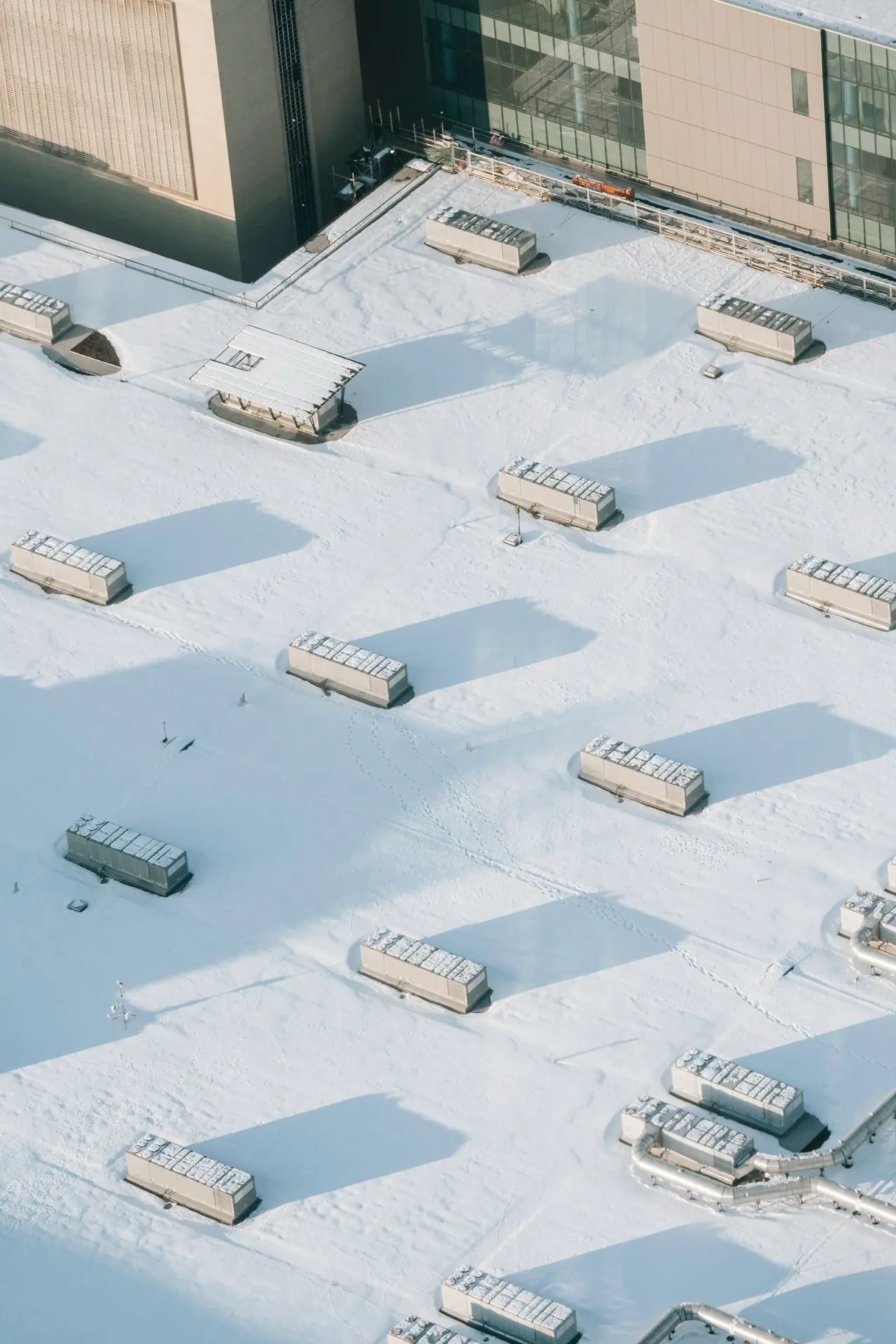
What winter does to a flat roof
A flat roof holds snow where a sloped roof sheds it. In a heavy winter, the weight can add up, especially where wind drifts snow against a parapet or a mechanical unit. Below the snow, the roof surface may sit just above freezing on warm days, so meltwater runs toward drains that are frozen shut.
This sets up a cycle. Meltwater freezes at the drain or scupper, new meltwater backs up behind the ice, finds the weakest seam and gets under the membrane. Then it freezes again and widens the gap. That is why winter leaks often appear on the first warm day, not the coldest one.
What to watch from the ground and the inside
Ice at scuppers and downspouts
Thick ice at outlets means water is backing up on the roof. See ice and snow damage.
Drifted snow against walls
Deep snow against a parapet melts and runs behind flashing.
Ceiling stains on a mild day
A stain after a thaw means water has entered at a seam or flashing. See ceiling water stains.
Sagging ceiling or noises
A sag under the roof can mean wet insulation or an overloaded deck. Treat it as urgent and keep people away from the area.
Icicles and ice on the walls
These point to where the water is leaving the roof edge, and where it may be getting in.
Should you shovel the roof?
Often the right answer is to leave it. A cut membrane is a far bigger problem than a few extra inches of snow. If the snow load is a concern, it is best handled by someone with fall protection and plastic shovels, working in layers and leaving a few centimetres of snow on the membrane. Never use metal shovels, ice picks, salt or heat guns.
Check the structure first. If you are not sure whether the roof can carry a deep snow load, ask a roofer or an engineer. Older roofs and additions built without much structure are the ones to worry about.
If water is coming in during winter
Protect the inside
Move belongings, place a bucket, and puncture a bulging ceiling stain carefully to let water drain rather than pool.
Photograph everything
The stain, the roof from a window, ice at the drains and the date.
Note when it leaks
During thaw, after snowfall, only in wind. This helps find the cause. See finding a flat roof leak.
Request a quote and mark urgent
Describe the leak on the quote form. Temporary leak protection is possible in some conditions, and a permanent repair often waits for milder weather.
Tell your insurer if needed
Your policy will say what to report and when.
Cold-weather repairs: what to expect
Some materials will not stick or seal properly in deep cold. Adhesives need a minimum temperature, hot-applied materials cool quickly, and wet or frozen surfaces prevent a good bond. Roofers can use temporary measures in winter, and then complete the repair when the temperature and the roof allow. Torch-applied modified bitumen can be installed in winter using special methods, according to manufacturer guidance, while adhesives and cold-applied systems are more limited. Ask what is planned: a temporary patch or a permanent repair, and which products the temperature allows. Do not expect a full replacement to be offered year-round.
A temporary protection visit starts from $350 per visit before HST. It is not the same as a permanent repair, and a spring follow-up is normal. For the permanent fix see flat roof leak repair.
Getting ready next fall
Most winter leaks have a fall cause: a blocked drain, a lifting seam or a flashing that was never sealed. The maintenance checklist lists what to clear and check before freeze-up. If your roof ponds every spring, discuss a taper or a second drain at your next quote; see ponding water.
Wind, drifting and the first thaw
The worst winter spots are usually next to something tall: a parapet, a penthouse, a rooftop unit. Wind drops snow there in deep drifts. The first thaw melts the base of the drift against the wall, and that is where the water finds a weak flashing.
Photograph those spots in fall when they are dry and clean. If a stain appears at the same wall after the first thaw, you will know where to point the roofer and what the flashing looked like before.
Questions about winter
Is it normal for ice to form on a flat roof?
Some ice is normal. Thick ice at drains, or ice that builds against walls, is a sign that water is backing up.
Can a roof be installed in winter?
Some work can, but cold limits adhesives and torch-on, and a wet roof cannot be roofed. Most replacements are planned for spring to fall.
Will snow damage the membrane?
Snow alone usually does not. Shovelling, ice-chopping and refreezing at seams do.
Leak, damage or an old flat roof?
Send a few details and photos. We reply by email with next steps and a written quote.